





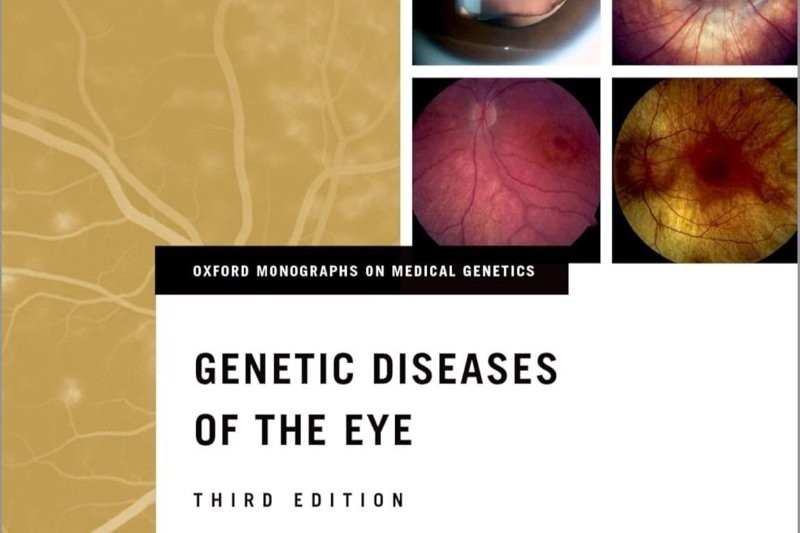
The third edition of this reference text, edited by Elias Traboulsi, is updated and brilliantly comprehensive, with chapters authored by more than 100 leading ophthalmic geneticists from across the world.
The book’s aim is to give a comprehensive, accurate and detailed description of genetic eye disease, covering conditions affecting all structures of the eye including complex eye malformations, retinal dystrophies, congenital cataract, congenital glaucoma and syndromic disease, such as ciliopathies.
While chapters provide a high level of detail on all known conditions to satisfy an ophthalmic geneticist, they also provide overviews and reference information that all eyecare practitioners would find useful when caring for these patients.
Helpfully, the first few chapters are dedicated to epidemiology, embryology, genetic counselling, family trees, genetic testing and breaking bad news. A hugely useful visual rehabilitation chapter provides practical and relevant information to help eyecare practitioners assess a patient, plus tips and tools to enhance remaining vision. It also provides a useful reminder of Charles Bonnet syndrome. For patients with advanced visual impairment, between 11 and 40% will experience visual hallucinations, which should be specifically asked about to reassure patients and provide support.
I was fortunate to co-author one of the chapters with editor Professor Elias Traboulsi, Cleveland Clinic Cole Eye Institute, on cone dysfunction syndromes, cone dystrophies and cone rod degenerations. This covered conditions including stationary achromatopsia and progressive cone and cone-rod dystrophies, with ABCA4-related disease (also known as Stargardt disease) being the most well-known.
Since 2012’s second edition, a paradigm shift in both diagnosis and treatment for genetic eye disease has occurred. Next-generation sequencing, including whole genome sequencing, has become readily available in the developed world, allowing rapid, affordable and more accurate methods of investigating patients.
For families, a genetic diagnosis helps to understand inheritance, prognosis and risk for future children. Achieving a specific diagnosis is an essential prerequisite for gene-specific therapies. was one of the first developed for any in the body.
However, gene-agnostic therapies are also increasingly entering trials, which is important as current diagnostic methods still only achieve a diagnosis in approximately 70% of patients. Furthermore, other treatment approaches in development, such as gene editing, are also discussed in this textbook.
Genetic Diseases of the Eye is the ultimate reference text to guide any eyecare practitioner in understanding and giving appropriate advice and rehabilitation to patients living with these rare genetic eye diseases.

Dr Sarah Hull is a senior medical officer specialising in genetics and paediatrics/strabismus, consulting at Greenlane Clinical Centre and Auckland Eye and a senior lecturer at the University of Auckland.