





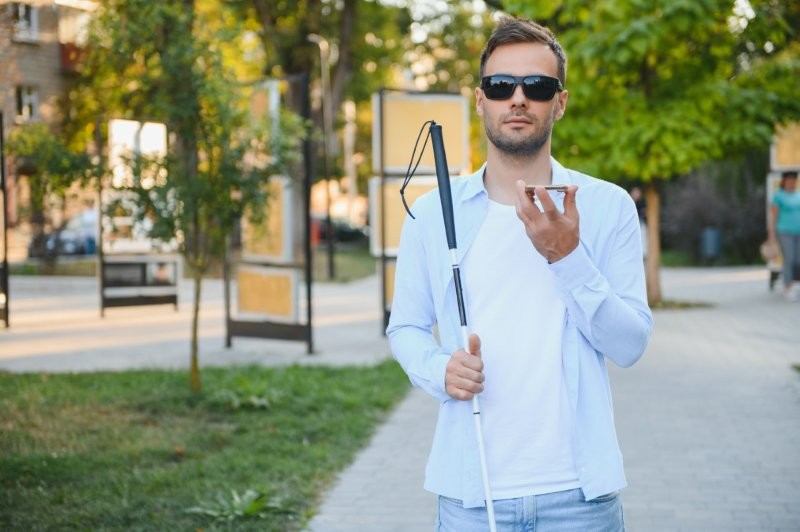
New research from Blind Low Vision New Zealand (BLVNZ) has revealed significant disparities in life outcomes for New Zealanders who are blind or visually impaired, finding inequities in nearly every key indicator of wellbeing and quality of life.
Using population-level data from Stats NZ for the first time, the ‘Shine a light on blindnessreport goes further than any previous research to illuminate the lived experience of sight loss in Aotearoa, said Andrea Midgen, CEO of BLVNZ. “Without this data, we can’t make strong evidence-based decisions or advise the government effectively. It tells us where support is most needed, where we can break down barriers, shift attitudes and create opportunities for our community,” she told RNZ’s Nine To Noon.
“[Data] is vital. People want evidence and when you’ve got evidence, it’s hard to refute. It helps us build a really strong case for change across all the different sectors, government, ministries and employers. It shines a light on what the real situation is and hopefully that will bring systemic change for our community.”
Lead policy analyst and BLVNZ client Cain Richardson said that, while almost 2.2% of the population has some kind of visual impairment, in 2023, there were over 4,600 people aged 15–64 living with severe visual impairment (0.16%). For this cohort, life expectancy was nine years lower than for New Zealanders with no visual impairment.
The report also found that more than 50% of people with severe visual impairments and 45% of those with other visual impairments live in areas with the highest socio-economic deprivation, compared with those without visual impairments (29%). Further, people with severe visual impairments are half as likely to own their home, seven times more likely to live in social housing and three times more likely to live in emergency housing.
Often found to have other comorbidities and requiring mental-health support, people with severe visual impairments were almost twice as likely to have one annual hospitalisation event as someone with no visual impairments. Over 25% of people with severe visual impairment and over 10% of people with other visual impairment had a diagnosis of diabetes. Other diagnosed eye disorders, including cataracts, were also more common in people with vision impairment (10 times more likely in people with severe visual impairments and 2.5 times more likely in people with other visual impairments). As a group, people with severe visual impairment were four times more likely to have no qualifications and only 26% were employed. Among those in work, 86% earned $60,000 a year or less.
“I was deeply surprised and shocked by how low the employment number is,” Richardson said. Employment is a foundation for all other outcomes in life and this will have a snowball effect, he said. “This captures the true cost of blindness – your poverty limits your agency to make choices to affect those other lifelong outcomes.”
The demographic distribution of blindness and visual impairment differs by age, gender and ethnicity, the report found. Of those people with severe visual impairment, 54% are male. For those with other visual impairment, 57% are female. The disability rate for severe visual impairment is 1.7 times greater for Māori and Pacific Peoples compared with other ethnicities.
‘People with severe visual impairment’ is the term BLVNZ chose to define those identified in Stats NZ’s Integrated Data Infrastructure as receiving support and services related to their vision or who have a hospital diagnosis of blindness or severe visual impairment. ‘People with other visual impairment’ includes those who have self-reported seeing difficulties. BLVNZ advised that caution is required when assessing absolute numbers as the administrative data will not be able to identify everyone with visual impairment.