






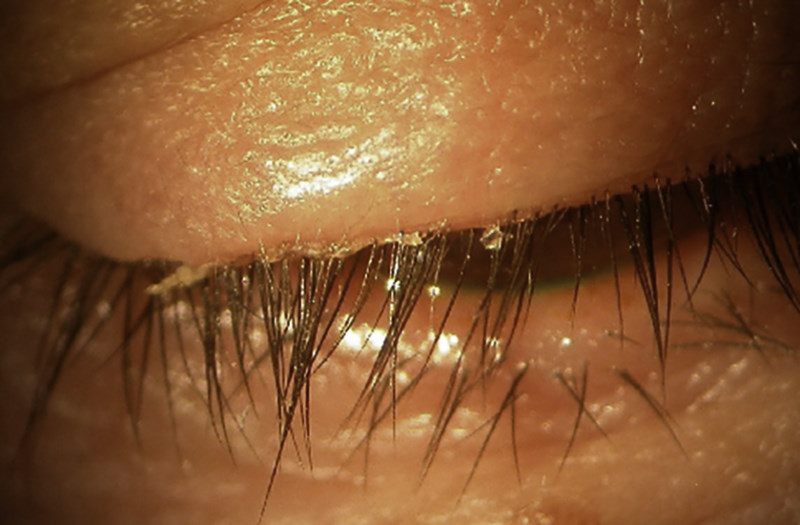
A secondary analysis of the Dry Eye Assessment and Management (DREAM) study found lid margin collarettes were common in patients with moderate-to-severe dry eye disease (DED).
Presence of collarettes – debris found at the base of the eyelashes and a clinical sign of chronic Demodex blepharitis – was significantly associated with White race (p = 0.001), non-Hispanic ethnicity (p = 0.006) and rosacea (p = 0.05), according to the study.
Of 1070 eyes at baseline, 65.3% had no collarettes, 28.0% had 1–5, and 6.6% had 6–20. Over the 1 year study period, 67% of eyes had no change in collarette severity, while 19% had increased severity and 14% had decreased severity. Moreover, while collarettes were found to be associated with worse ocular surface signs, predominantly eyelid erythema (18.6% vs 12.2%, p < 0.001), there was no association with dry eye symptoms, authors noted.