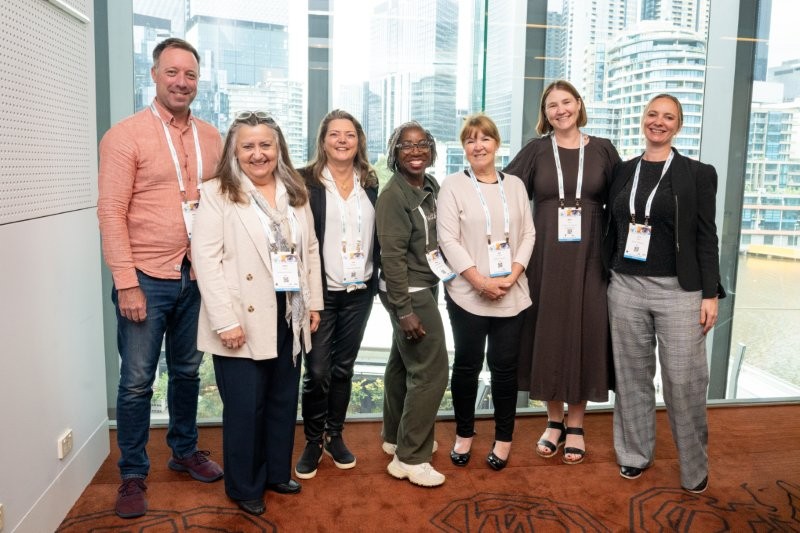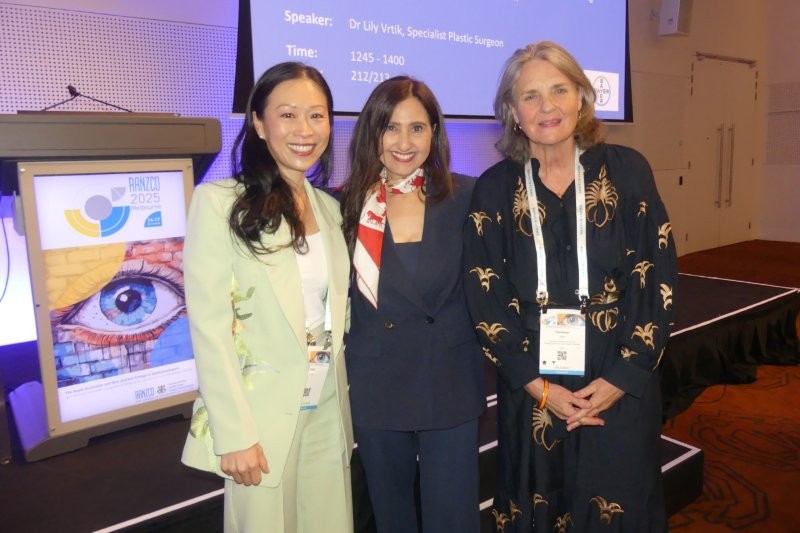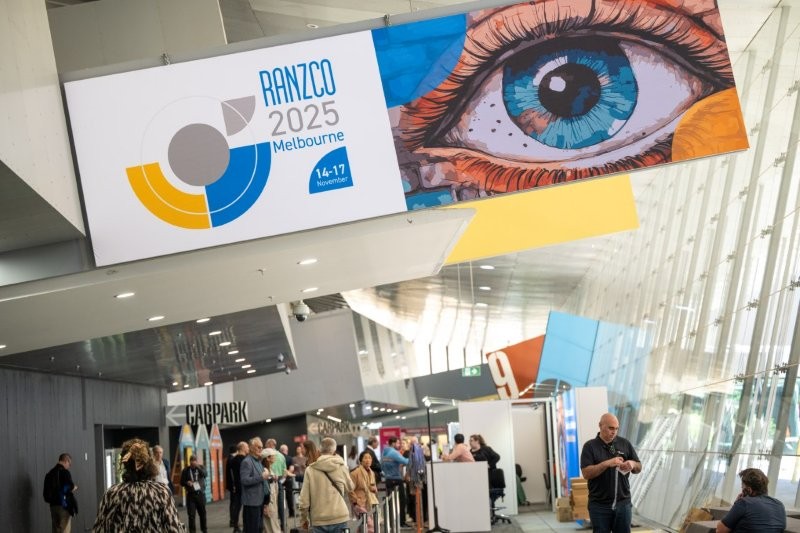







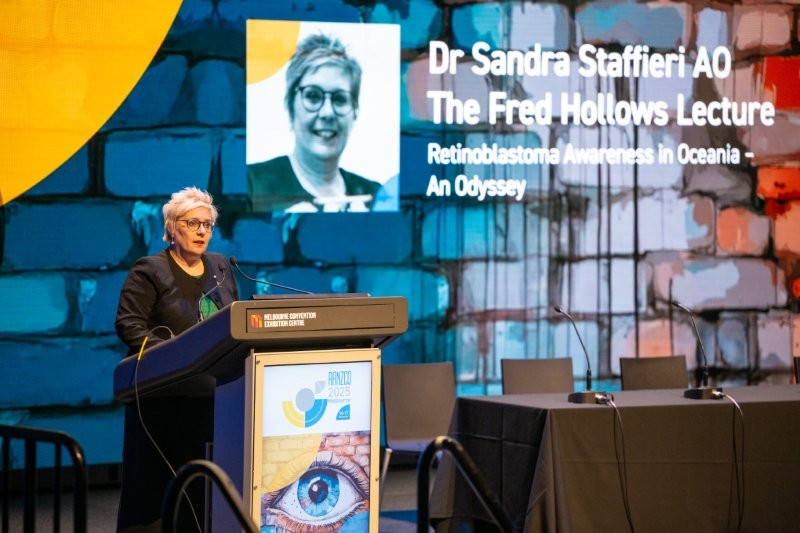
I was fortunate to attend November 2025’s one-day Australian Ophthalmic Nurses Association (AONA) Congress, held annually alongside the RANZCO congress. There was such a great turnout from the ophthalmic nursing community that if you didn’t get there early for each session you’d risk missing out on a seat!
There were some great medical, nursing and industry updates and new innovations presented, with a wide variety of topics for ophthalmic nurses from all areas of practice. After a warm welcome by AONA president Lesley McDowell, keynote Julia Costello talked about the importance of expanding our field of view, highlighted with a case study where missed flags in assessment can lead to delays in diagnosis.
Corneal tattooing and identity
Amy Chumkasian, along with her colleague Dr Prakshi Chopra, gave a very interesting presentation on corneal tattooing, discussing the history of its development. It was upsetting to learn that the practice was carried out on children in Auschwitz in World War Two, presumably with an experimental aim. Our speakers outlined that, these days, the purpose of corneal tattooing is to reduce the amount of light entering the eye for conditions such as albinism, aniridia and traumatic iris defects. Research has shown corneal tattooing can help reduce stress and social anxiety for these patients, improving their satisfaction and proving a less invasive option than other procedures. In some countries this procedure is offered for purely cosmetic reasons and, while a relatively safe option, it is not without risk. The potential for vision loss and other complications were highlighted as important discussion points for patients, as outlined by the AAO last year.
Chumkasian also provided a good reminder about the importance of the eye as part of people’s identity, reflecting on the importance of nursing care in providing support and education. Interesting to know that in the state of Victoria, an unlicensed practitioner providing corneal tattooing can be fined or sentenced to prison. (In New Zealand, such procedures are effectively restricted through a combination of local council bylaws and national health law, which limit invasive eye procedures to registered health practitioners acting within their scope of practice.)
Discussion then turned to the pros and cons of alternatives, such as contact lenses, evisceration/enucleation followed by a prosthesis fitting or corneal transplant. The procedure for the latter was detailed, with newer automated techniques being employed with the femtosecond laser, which I had only associated with its use in cataract surgery.
Service redesign and emergency care
I enjoyed Rajith Thotijar’s session on the emergency department (ED) improvements he’s been involved in at the Royal Victorian Eye & Ear Hospital in Melbourne, as we are always looking at ways to improve our own acute eye service in Auckland. The review of the fast track (FT) stream introduced in 2015 was found to be less effective than hoped, due to the lack of space and nursing staff allocated to it. The FT process was for patients with low-acuity conditions – such as chalazion, subtarsal foreign bodies, blepharitis and those suitable for a nurse-led pathway – to be seen in a separate work stream and discharged early, rather than taking up space in the ED. After a revitalised workflow was implemented with dedicated staff and space, early review indicates the new process not only improves the flow of FT patients but also alleviates the wait time for emergencies.
Expanding the nurse role
While nurse-led intravitreal injection (IVI) clinics are commonplace across New Zealand, they are relatively new in Australia, so it was fantastic to hear about the growing workforce of nurses developing training programmes and beginning to provide IVI across more Australian states. It’s great to see nurses being utilised in this important role to address the burgeoning pressure on our waitlists. Lyn Scott from Waikato, New Zealand’s third nurse injector, discussed the development of her role over many years and gave an informative review of the pathology of polypoidal choroidal vasculopathy, a condition she is familiar with in her nurse-led injection clinics. She also had some great tips for reducing waste and recycling as much as possible.
Northern Territory’s Liz Okely, an early provider of nurse IVI, gave a detailed guide of the procedure and highlighted resources for other nurses looking to develop in this role, such as the online theory training provided by Moorfields in London. This was also considered in the panel discussion on education opportunities in Australia. There followed a robust discussion on utilising existing courses and the possibility of replicating them in Australia. This inevitably led to debate over the politics of course ownership and whether it is appropriate to share them between states. I’m sure there will be a great deal more debate on this topic in the coming year. A recommendation was given for the book Fundamentals of Intravitreal Injections: A Guide for Ophthalmic Nurse Practitioners and Allied Health Professionals.
Learning across the Pacific
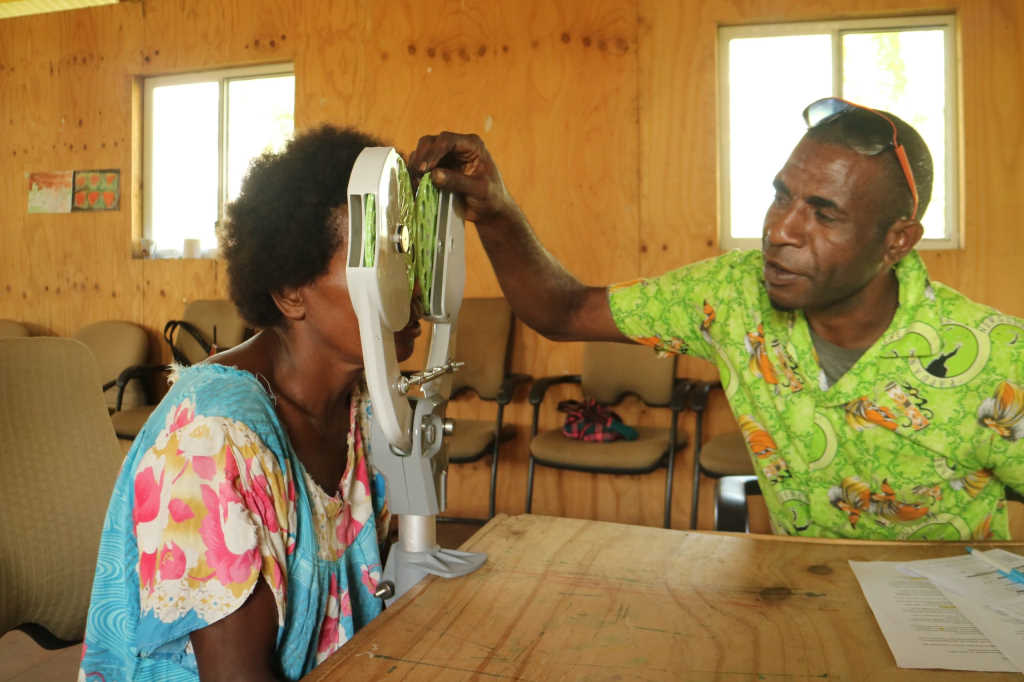
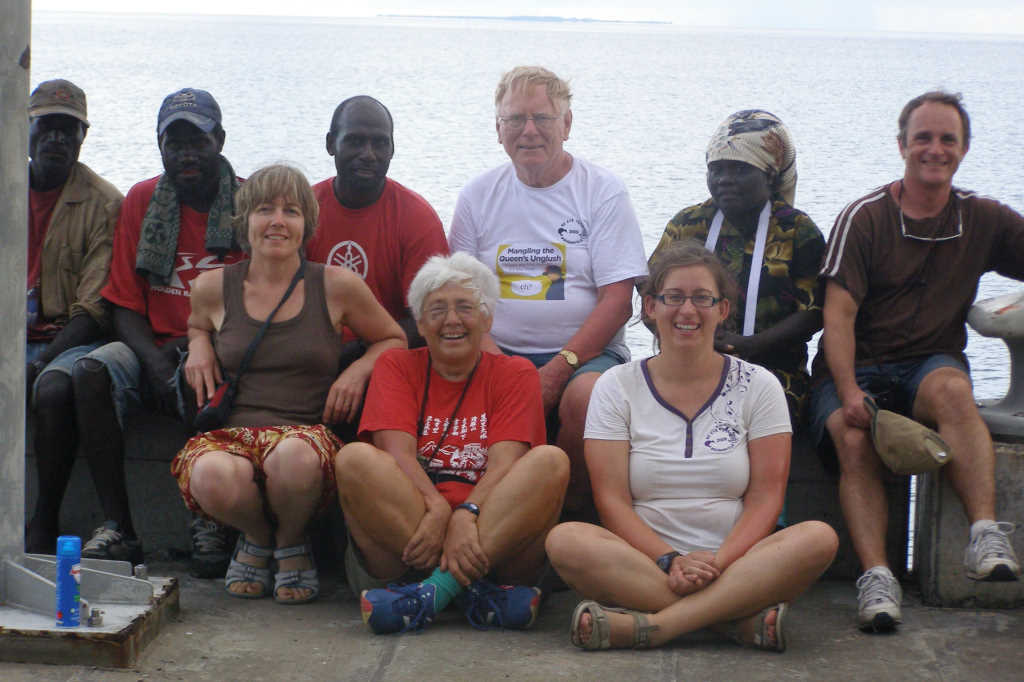
Kerrie Legg discussed the Griffith Ophthalmology Project, addressing the impact of vision impairment in countries such as the Solomon Islands by training local nurses to carry out eye screening under a hub-and-spoke model of care. During Covid and the reduction in overseas travel, the team turned its attention to Australia and realised the importance of reducing the eye-health disparity experienced by indigenous people. Education and upskilling symposia were provided to Aboriginal health workers, along with resources such as the Eye Emergency Manual, with a view to developing a sustainable model of eye healthcare in regional Australia. The recent donation of a portable retinal camera will also improve the provision of diabetic retinal screening in these areas.
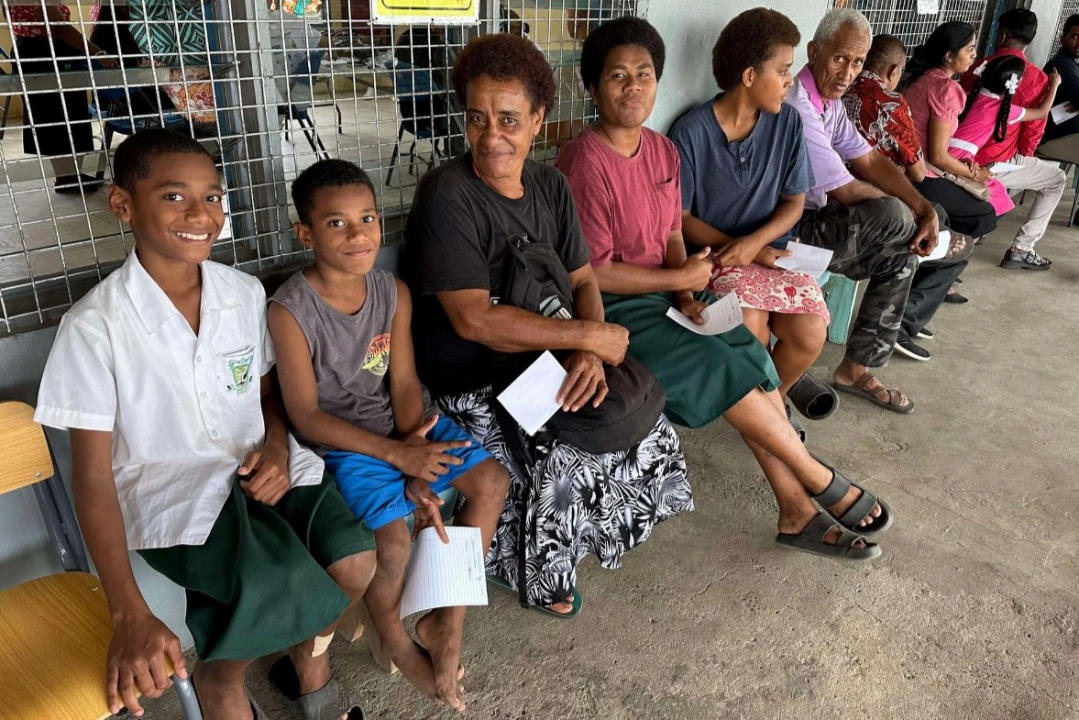
Once again our colleagues from Fiji enlightened and inspired us with their visual representation of the vast area covered by their teams, providing education, training and support to eye healthcare workers across the Pacific, particularly in diabetic eyecare. As part of the training, students travel to outreach clinics to perform diabetic retinal screening for patients in remote areas; however, there is planning underway to move to a virtual option for the theoretical training, which will alleviate a lot of the travel issues to these remote areas.
New therapies and modifiable risks
Westmead ophthalmologist Dr Krishna Tumuluri drew audible gasps from the audience with fairly graphic pictures of thyroid eye disease and its effects on extraocular muscles, discussing new treatment trials in Sydney and the development of targeted therapies that could emerge this year. Dr Tess Huynh, an ophthalmologist from Campsie, gave an interesting analogy of the effects of eye rubbing, one of few modifiable risk factors in keratoconus (KC). She described stapled sheets of paper being rubbed against each other weakening the ‘connection bonds’, illustrating how corneal crosslinking can then strengthen those bonds. KC management options were illustrated with case studies and a video of CAIRS surgery. Zaditen was the recommended antihistamine to alleviate the impact of atopy, while management strategies include copper sulphate drops to increase the effects of crosslinking, reducing progression.
Industry updates
A new element at this conference was the sponsors’ talks, with updates through the day from our industry representatives, which was great, given there isn’t usually much engagement between nurses and pharmaceutical companies. The first was a topical presentation from Roche, regarding Vabysmo (faricimab), the latest medication in our toolbox for wet age-related macular degeneration, diabetic macular oedema and retinal vein occlusion, which is just coming into use in New Zealand. The Alcon representative discussed using innovations in technology in packaging and switching to sustainable cold-chain (a temperature-controlled barrier) packaging. The company has reduced packaging weight and landfill waste and is working towards its goal of diverting all non-hazardous waste away from landfill by 2030. Zeiss introduced a new surgical cassette for combined cataract and vitreoretinal surgery that only requires the changing of the giving set. And lastly, gold sponsor Bausch + Lomb gave us an update on its theatre products and its ‘Blink’ range of artificial tears and lid hygiene wipes.
Stories beyond the clinic
An established author of nursing and clinical publications, former AONA president Dr Heather Machin, demonstrated her array of talents with the reading of her own very sweet children’s book Grandad’s Last Wish, written to help children understand the loss of a grandparent and how the family complying with their wishes to donate their organs helps other people. I wonder if we should expect to see any more kids’ books penned by Dr Machin?
Ocularist and clinical ophthalmic nurse Roseanna-Zoe Knowles discussed the importance of effective communication when educating patients. Collaborative Eye Care in Action is her podcast, developed to support patients with vision loss and educate care providers. When we hear from patients, we can learn and improve healthcare delivery and better support them. Knowles made an important point that education should be considered a clinical intervention, along with all the other methods of care we provide. My take-home message from her was “empowered patients make empowered decisions”. I will definitely be looking up her podcast to learn more!
It was a great day all round with something for everyone and I’m excited this year’s event in Tāmaki Makaurau, which I encourage you all to attend.
Kathryn Millichamp is a nurse practitioner with more than 24 years of experience in ophthalmology nursing. She is currently practising in the out-patient clinics at Te Whatu Ora Te Toka Tumai Auckland and is a member of the Eye Health National Clinical Network.