





New Zealand researchers are investigating tear-film signatures that may help early diagnosis of Parkinson’s and Alzheimer’s disease.
Their work – described in Auckland’s Neurological Foundation report – has shown clear differences in the aggregation of the protein alpha-synuclein (aSyn) in the tears of people with Parkinson’s compared with age-matched controls. Misfolded aSyn forms toxic clumps called Lewy bodies, a hallmark of Parkinson’s disease and Lewy-body dementia. “Misfolding means that the protein no longer functions normally and encourages more ‘normal’ protein to also misfold and indeed propagate across neurons, causing a spread of injury across the brain,” said project lead Canterbury University neuropsychologist Professor Dalrymple-Alford.
The researchers, who also included Otago University neurologist Professor Tim Anderson and Auckland University’s Associate Professor Stuti Misra, reported that tear collection was strongly preferred by participants over venous or cerebrospinal fluid (CSF) sampling, highlighting its potential as a practical diagnostic medium. “You’ll get a few tears if you collect my CSF, but could we just start with the tears first?” said one study participant. Their findings have prompted further comparison with Alzheimer’s to identify overlapping and disease-specific signatures.
Although the current assay is very technical, a PhD student in Prof Dalrymple-Alford’s lab, Jemima Ganderton, is exploring methods in a related grant that may make the analysis a far simpler and potentially office-based procedure.

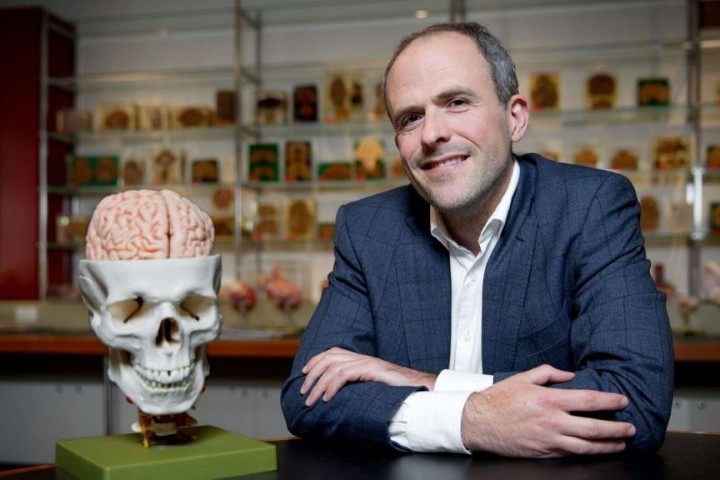
Professor John Dalrymple-Alford
Prof Dalrymple-Alford’s group is comparing aSyn aggregation in the tears of people for whom cognition is suboptimal, but not severe enough to cause failure in everyday tasks, with those who have early dementia and are unable to live independently, he said. “Co-pathology of protein misfolding characteristic of both Parkinson’s and Alzheimer’s often occurs in the brain of a single [one] person. It is possible that a similar situation occurs in tears. We also hope, with additional funding, to examine a wider range of proteins in tears and the micro-RNA, which regulates gene expression. This work will help specify the differences and similarities across these two common neurodegenerative conditions.” It’s not yet known if increased aSyn aggregation also occurs in other conditions, said Prof Dalrymple-Alford.
Calling seniors!
The team is keen to hear from suitable study participants, including older controls aged between 50 and 85 years without any current or previous neurological or neuropsychiatric conditions. “We’re especially interested in anyone who has both Parkinson’s disease and is due to have, or has had, a corneal transplant,” he said. As the body’s most densely innervated sensory tissue, the cornea’s nerve endings can be severely affected in both Parkinson’s and in Alzheimer’s, he explained. “We are investigating whether the cornea is a critical structure involved in both conditions – perhaps some of the abnormal aSyn emanates from the cornea. We believe this is a truly exciting, and hitherto completely neglected, aspect of Parkinson’s disease and Alzheimer’s disease.”
Around 30–50% of older patients with Parkinson’s disease or Lewy-body dementia also show brain protein changes typically associated with Alzheimer’s disease, said Prof Dalrymple-Alford. Conversely, a similar proportion of people with Alzheimer’s-related pathology show protein misfolding linked to Parkinson’s disease. “While these neuropathologies may overlap or differ in their brain distribution, clinical features usually remain distinct for many years. The evidence suggests their combined pathology may worsen symptoms and accelerate disease progression, so determining how these protein changes differ or overlap in tears could simplify assessment, diagnosis, prognosis and potentially guide more personalised treatment,” he said.