






Dublin advanced nurse practitioner Diana Malata, who spearheaded Ireland’s nurse-led crosslinking (CXL) treatment programme, explains how it has accelerated care for patients living with keratoconus and how New Zealand might benefit from following suit.
Over a decade ago, the Royal Victoria Eye and Ear Hospital (RVEEH) in Dublin pioneered a nurse-led (epithelium-off) accelerated CXL service in Ireland. The goal of the collaboration between ophthalmologists and ophthalmic nurses was to improve patient care, reduce wait times and free up ophthalmologists to perform more complex eye procedures.
CXL is a minimally invasive, day-stay procedure used to strengthen the cornea by applying riboflavin (vitamin B2) drops and UV light, stimulating collagen cross-links. In epithelium-off (epi-off) CXL, the top layer of the cornea is removed and riboflavin drops are applied to the eye every few minutes for 10–30 minutes.
In RVEEH, we’ve always performed epi-off CXL. The patient will be sore while the epithelium is healing, so they are prescribed painkillers for three days. Studies show epi-off CXL allows better riboflavin penetration and more effective long-term results. Although epi-on is more comfortable for patients and has a lower risk of post-operative complications, epi-off is considered the gold standard to halt keratoconus progression.
In 2008, RVEEH ophthalmologists began using the Dresden CXL protocol, with treatment taking an hour; by 2012, an accelerated CXL protocol had cut the treatment time in half, with just 10 minutes of riboflavin application then four minutes of UV exposure.
At that time in RVEEH, ophthalmologists performed CXL in the operating theatre, where I was among the nurses assisting them. We now perform CXL in the Minor Procedure Unit (MPU) to free up more theatre space for procedures such as cataract surgery, corneal transplantation and vitreoretinal surgery.
In 2014, I started working as a clinical research nurse with Professor Conor Murphy, principal investigator in a five-year EU-funded research project, ‘Adverse immune signatures and their prevention in corneal transplantation’(isicort) at the Royal College of Surgeons in Ireland (RCSI). When we began discussing setting up a nurse-led CXL service in RVEEH, I reached out to Melanie Mason, the first nurse to perform CXL at Moorfields. She was very generous in sharing Moorfields’ policy and told me that mirroring such a service would require a “willing nurse and a very willing teacher”. I was very lucky to have such teachers, Professors Murphy and Billy Power, who supported me in setting up the service.
As at Moorfields, our protocol was for nurses to observe five CXL procedures before starting the training programme, after which they would perform 20 procedures under ophthalmologist supervision. Although I completed my training in 2016, to allow the service to be fully nurse-led, I studied nurse prescribing in RCSI and registered as a nurse prescriber with the Nursing and Midwifery Board of Ireland the following year. Two years later, I registered as an advanced nurse practitioner.
In March this year, I performed the first Sub400 CXL protocol in RVEEH, under the supervision of Dr Barry Power, who completed his ophthalmology anterior segment fellowship at the University of Auckland. Sub400 is a personalised CXL for thin corneas, so I am allowed to treat patients with corneal thickness of 375µm (epi-on) and I’m included in the consultation process to reduce the corneal thickness so that I can treat with Sub400 protocol.
Safety and patient satisfaction
In January 2017, I assessed the safety of the nurse-delivered CXL via an audit and telephone patient satisfaction survey, carried out by an RCSI medical student to avoid bias. I was keen to know if any of my patients had complications after CXL and how they felt about a nurse performing it. We had positive results from that audit, which was published in the Irish Nurses and Midwives Organisation’s (INMO’s) September 2018 World of Irish Nursing magazine. Compared with ophthalmologist-led treatment, the service reduced patients' average waiting time for CXL from 125 days to 53 days, their hospital stay from 3 hours 14 min to 1 hour 29 min and 95% of them said they were very satisfied (72%) or satisfied (23%) with their nurse-led treatment.
In 2022, a second audit showed no post-operative complications in nurse-delivered CXL and 99% of patients rated the service as good or very good.
Replicating the model in Australia
In October 2023, I presented on our nurse-led CXL service at the World Association of Eye Hospitals (WAEH) meeting at the Royal Victorian Eye and Ear Hospital Melbourne and won the best poster – members’ choice award. Following this, I was appointed co-lead of the WAEH Community of Practice (CoP) for nurses and allied health professionals, together with Associate Professor Tendai Gwenhure, senior clinical educator at Moorfields. After I presented, Mark Crocker, ophthalmology clinical nurse consultant (CNC) from Sunshine Coast Health (SCH) in Queensland, reached out to me to discuss setting up a nurse-led CXL service.
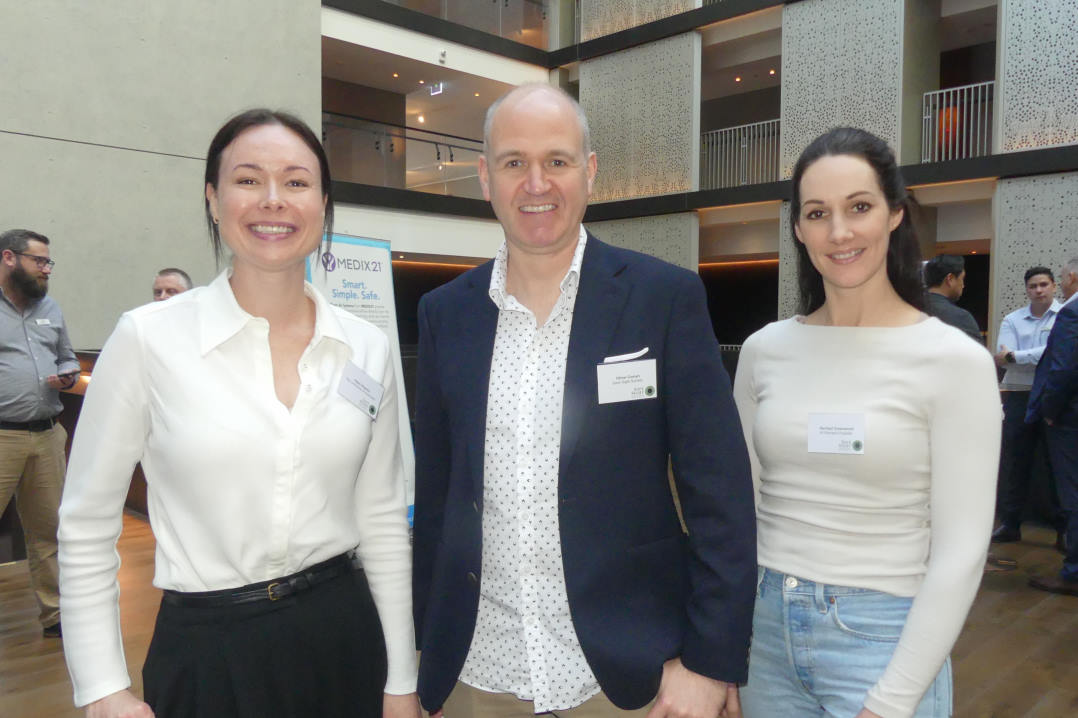
In November 2025, the SCH Ophthalmology Department launched Australia’s first nurse-led CXL service, led by CNCs Mark Crocker, Gillian Matthews and Blessel Villa, with the support of ophthalmologist Dr Nicholas York. Prior to that, SCH patients requiring corneal procedures needed to travel to Brisbane for treatment. The introduction of this service marks the beginning of SCH’s broader plan to expand its ophthalmology offerings and provide more comprehensive care close to home.
The New Zealand perspective
Nurse-led CXL has not yet become the standard model in New Zealand, according to Auckland ophthalmologist Dr Mo Ziaei. “While there was early interest across the country, broader adoption has been limited. In Auckland, CXL is typically delivered using a team-based model, rather than being fully nurse led. In those settings treatments are generally performed by a junior ophthalmology fellow in the minor ops theatre, working closely with an experienced optometry and nursing team.” This allows appropriate clinical oversight, particularly in patient selection, protocol choice (epithelium-on vs epithelium-off) and management of any intra- or post-operative considerations, while maintaining efficiency, Dr Ziaei explained.
“There are likely a few reasons why a fully nurse-led model has not become widespread: the relatively smaller procedural volumes compared with larger international centres, plus variability in local training frameworks and governance structures. That said, the expanded role of optometrists and allied staff within a supervised model is certainly growing,” he said. “I think this is where New Zealand is eventually heading.”
With additional reporting by Drew Jones.
Diana Malata is an advanced nurse practitioner in Dublin’s RVEEH. She is co-chair and co-founder of the Women in Vision and Eye Research Ireland network and a co-lead in WAEH CoP for Nurses and Allied Health Personnel. In 2018 she received the INMO JC Coleman Research and Innovation award for her work in setting up Ireland’s first nurse-led corneal crosslinking service.