






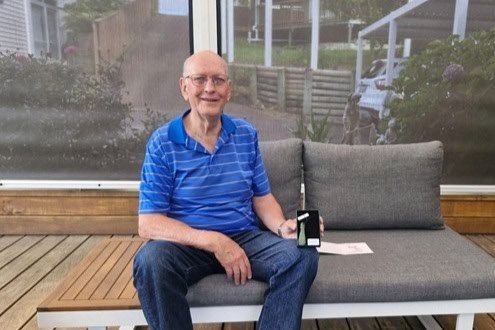
In a world where everything – including medicine – has been swayed towards prioritising convenience and speed, one Auckland optometrist remains anchored to his principles. Greymouth reporter Vihan Dalal profiles Trevor Skinner upon his retirement
As a boy growing up in South Africa, Trevor Skinner was fascinated by the fact that people in front of him were actually upside down inside his head. “I did a lot of reading about eyes and vision and all my [school] projects were based on the eye,” recalls the veteran optometrist, recently retired after almost 50 years in the industry.
Skinner’s path into optometry seemed natural. In his high-school years he worked as a technician, cutting and grinding lenses. Observing the optometrists at his workplace convinced him to make eyecare his profession. But, unlike today’s graduates, he first had to earn his stripes in the South African army.
During the bellicose 1970s, when South Africa was involved in a war with neighbouring Namibia, Zambia and Angola, Skinner joined the medical corps as part of his compulsory service. After becoming a second lieutenant, he worked at the Medical Military Institute, where he tested eyes on both fighter and commercial pilots.
It was also during this time in Gqeberha, formerly known as Port Elizabeth, that Skinner met his future wife, Janice, and completed the rest of his service at a national hospital. He also met optometrist Rolf Trichard – who had just parted ways with his business partner – which led to the establishment of Trichard and Skinner. Their busy practice fitted lenses on the premises so patients could have a new set of spectacles within an hour.
“We basically worked on the premise of quality and empathy… and we could beat most of the other practitioners who had the exact same qualifications as us,” says Skinner.
He subsequently joined the South African Optometric Association (SAOA), where he served two terms as president from 1999 to 2000 and again from 2003 to 2005. However, it was during his involvement with the SAOA that Skinner witnessed a rift between ophthalmology and optometry. He recalls fellow optometrist Dr Sidney Saks escalating his grievances. “Sidney went to the World Council of Optometry, where he fought for the use of fluorescein, which was regarded by ophthalmology as ‘you may not do that, you may kill a patient’.” Fortunately, the council ruled in favour of optometrists using fluorescein, which made fitting contact lenses easier.
However, the battle to advance optometry’s reputation in South Africa raged on. Skinner and his SAOA colleagues urged optometrists not to use window displays to attract customers. “We didn’t want to be known as opticians and optical mechanics because the word ‘optometrist’ was new [to the public] in the ’70s. Most people understood an optometrist as an optician.”
Despite these challenges, Skinner never lost sight of his core purpose: practising as an optometrist. He recalls a young woman visiting him following an accident. “She came in to see me with her leg in plaster, her arm in plaster and she had broken her glasses.” She was diagnosed with papilloedema due to an impact to her head and needed the fluid drained to relieve the build-up of pressure. “We saved not only her sight but her life,” he recalls.
In the 2010s, following a careful analysis of his life, Skinner moved to New Zealand and began working in the East Auckland suburb of Saint Heliers for Carlisle Mason, before it was acquired by Luxottica. There, he developed a deep bond with his patients and became the optometrist of entire families. “I even had the delightful experience of seeing a grandchild of the family that I’ve seen from the get-go and that gave me a lot of satisfaction,” he says.
“What was different about Trevor was that he always cared about patients. He always put them first and really thought about whether they needed something and always communicated that,” says former colleague and OPSM store manager Stella Marris.
Skinner shared the same bond with his co-workers, as former colleague and co-founder of Optique Eyecare Sashi Singh explains. “When we launched Optique, there was a little article about us. He was one of the first optometrists to reach out and congratulate us… He’s very supportive of the new generation.”
Over the decades, Skinner became something of a career adviser for some of his patients and has one particular piece of wisdom for young optoms. “The whole core of what I’m talking about is passion for optometry. If you’ve got a passion, you will go places. If you haven’t got a passion for it, it will just be a job that is very routine, because you do the same thing every half an hour.”
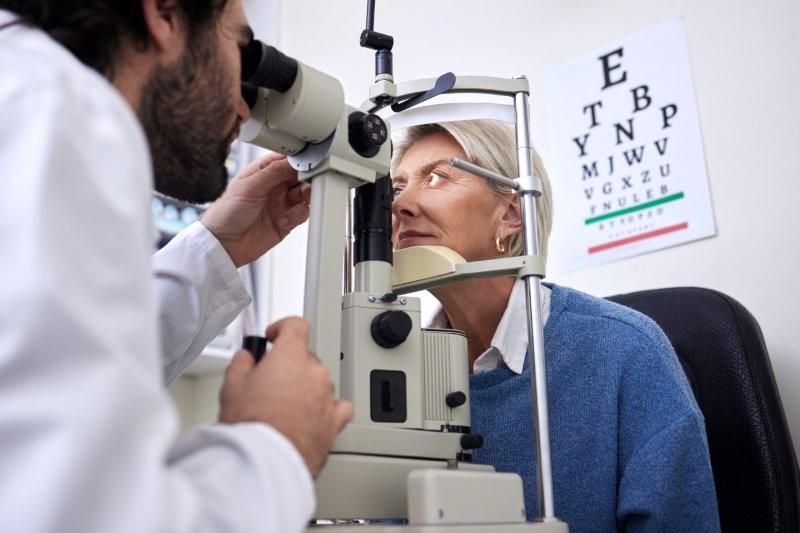
Despite the increase in availability of glasses online, Skinner says he believes optometry is an exciting career and a vital resource for patients. “Optometry is seen as the gateway to avoid the cost of an ophthalmologist. We get a lot of patients coming to us first, just to check whenever they see a flash or a floater.”
Skinner says he is still amazed at how the eye works. “I still find it a wonderful career. There will always be a place for optometry.”
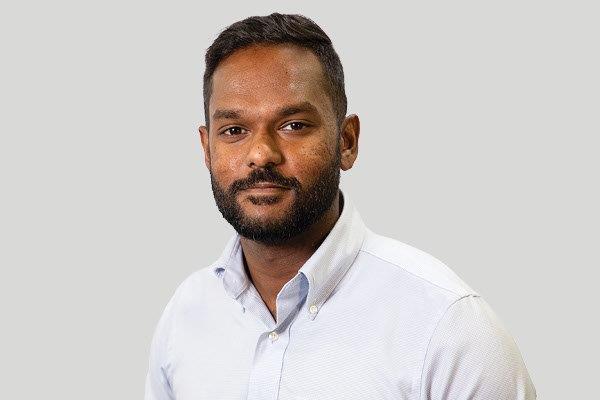
Vihan Dalal is a local democracy reporter in Greymouth who covers human-interest and social issues. His work can be found on student radio station 95bFM, where he has produced interviews and digital stories.