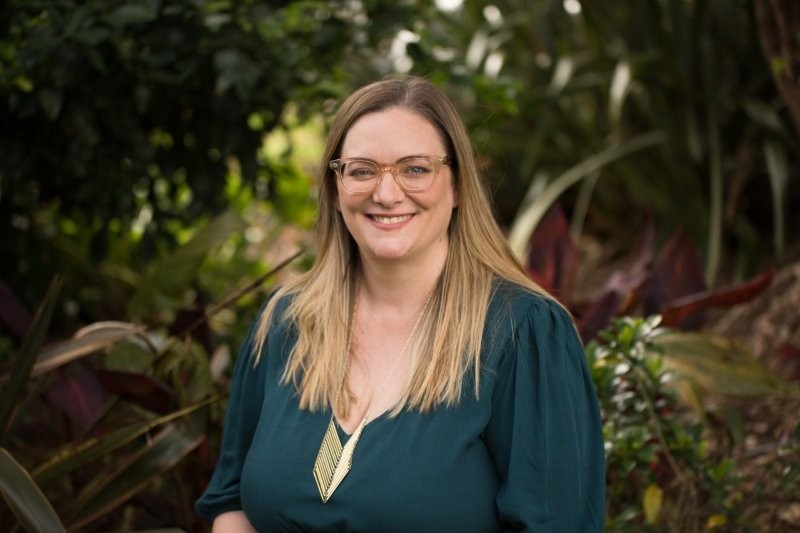






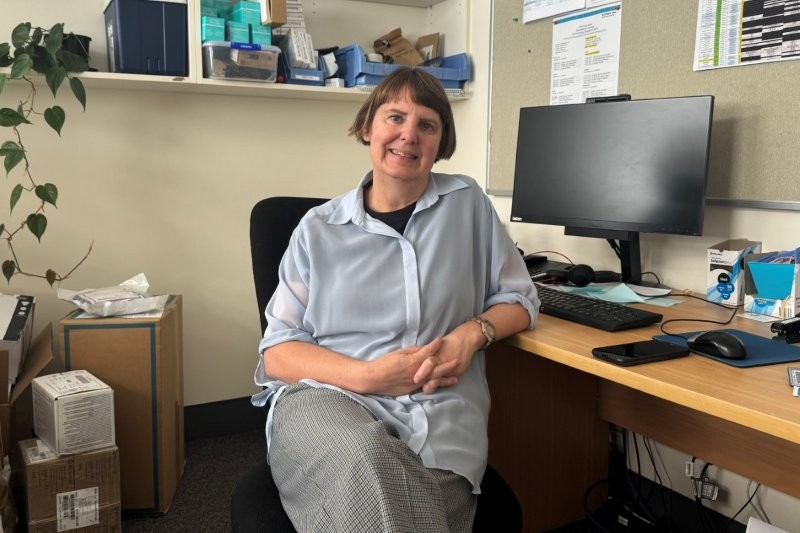
Susanne Bradley talks to Dr Sarah Welch, co-lead of Health New Zealand Te Whatu Ora’s Eye Health National Clinical Network about what motivates her and her views on access to eye health in New Zealand.
Waiting in the busy reception area of the Greenlane Eye Clinic, I feel lucky to catch Dr Sarah Welch between engagements. Walking briskly, she guides me to her shared office, tucked away behind the reception and the nurses’ station. As we get settled, she puts me at ease by sharing how it catches her out every time a junior doctor approaches her with a respectful ‘Dr Welch?’; “Just call me Sarah, I tell them.”
Starting out, medicine was not on the cards for Sarah. Having an interest in both people and science, she did a degree in maths and English at Victoria University of Wellington. After trying a few different jobs, she landed a role as an assistant editor in the film industry. While loving film as a medium, she found the work’s structure challenging. “[In film] you work for six to eight weeks, or maybe a month or two, six days a week, 10 hours a day, so you do nothing but film. Then suddenly, you're an unemployed bum and you don't know what you're going to do next.”
Had she stuck at it, this situation might have improved, she says, but then there was also the lack of artistic freedom to contend with. “It’s very hard to make a living doing alternative, arty films, so I was asking myself if this [working on TV series] was what I really wanted to do.” In the end, people and science won the day and Sarah enrolled to study medicine. Completing her clinical years in Wellington through the University of Otago Medical School in 1997, she also did a one-year research degree in public health. She then moved to Auckland Hospital as a junior doctor and fell in love with ophthalmology while spending a three-month rotation in the specialty. “Working as a house officer in the ophthalmology department back then, we had more autonomy compared with other [district health] boards and eyes are just so cool. The way you can diagnose just by looking at the patient’s eyes, you do the examination, you diagnose and advise a treatment – that's unusual in medicine.”
Patient contact is very valuable to Sarah and she says she still gets a kick out of performing surgery. “It's challenging but it's a time when I’m very focused on the now with nothing else going on. People always talk about that; how good surgery is for your brain calmness. Some surgeries are obviously more challenging than others but having done it for a while now, it's also just kind of fun!”
Being part of a team to create change that works for doctors and patients while driving better health outcomes is what motivates Sarah in her leadership roles, she says. Having spent more than a decade as clinical lead for the Greenlane Eye Clinic, she has extensive experience in working within hospital bureaucracies. “I've also formed relationships within Te Whatu Ora, which is helpful. I also think we've been lucky to have access and support [for Eye Health Network initiatives] from all the hierarchies within Te Whatu Ora and within individual hospitals.”
Sarah’s background has given her a wider perspective, she says. “I think I’m quite skilled at taking the long-term view – painting a picture of where we might be going interests me. For many people that’s not interesting, it’s more about the here and now, but that’s not how I see it.”
Striving for fairness
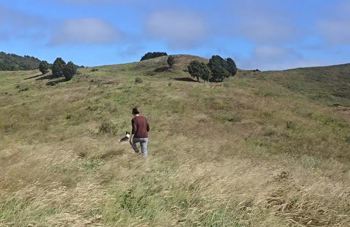
Sarah and her dog on her property in Kaipara
Social justice is also a big driver, motivating Sarah to get involved in public health. “My mother was deeply involved in politics [Sarah’s mother, Lois, stood for Parliament for the Waikato a couple of times during the ’80s] and I've always been really interested in social justice. I think New Zealand has become a less fair place than [it was] when I grew up. There's a greater divide between the rich and poor and there's less access to good education and health. It’s one of the things that drives me in the Eye Health Network, because vision is one of the foundational aspects of health for many people. So, I work within the system as much as possible to try and improve things. I do think that everyone deserves to be able to reach their full potential and we're lucky in New Zealand that we do have some support for that. But, personally, I think we could do better.”
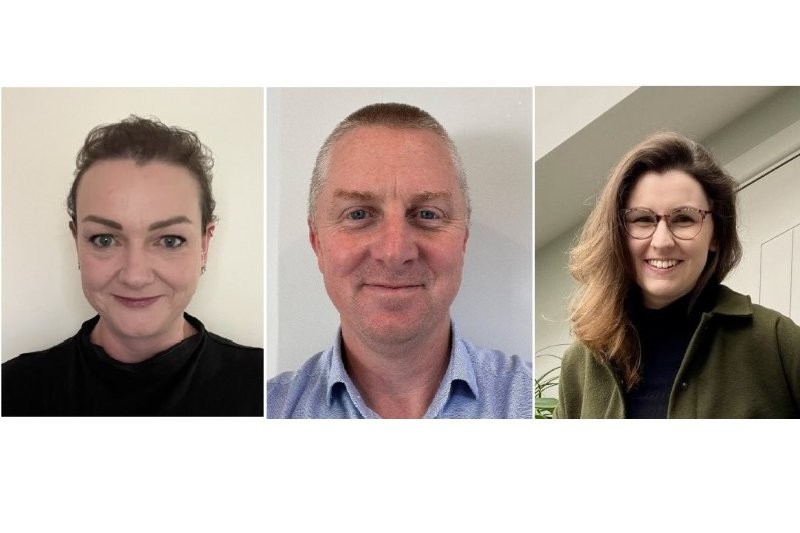
If she could wave a magic wand and change one thing about eye health in New Zealand right now, it would be to speed up the implementation of the recommendations made by the Eye Health Network. “I'm excited by the Eye Health Network and I enjoy working with Alistair [Papali’i-Curtin] and Justin [Mora] – I believe we have a very good vision for how we see the network evolving.
“I think we're lucky in that we have fantastic eye-health teams, our ophthalmologists, our optometrists, etc; we've got very good training and equipment and, generally, I think people get good treatment. The thing that is not so lucky is everybody not having access or equal access to those things. There are some people who are missing out and don't get good treatment, not because the treatment is bad, but just because they come too late, they don't get there in time or they just don't get there at all.
“We're kind of world-class, but not world-class for everyone. I think that's the aim of the network, to try and fix that.”
While surgery might be good for brain calmness, so is nature. To recharge, Sarah says she loves spending time at her block of regenerative forest land in the Kaipara District. “I go up there with my partner and I put my gumboots on, stomp around the farm and take the dog for a walk, weed the garden and things like that; just being outside in nature, I really enjoy it.”
Launched in March 2024, the Eye Health National Clinical Network – co-led by Sarah, Dr Justin Mora and Dr Alistair Papali'i-Curtin – is one of 13 networks initiated by Health New Zealand to provide governance from clinical voices in different specialties.